
ABDM WASA Audit Compliance has become a crucial requirement for healthcare applications in India, ensuring they meet the security and interoperability standards set by the National Digital Health Mission. The Ayushman Bharat Digital Mission (ABDM) seeks to establish a unified digital health infrastructure that will enable easy and secure access to healthcare services. The Web Application Security Audit (WASA), which is required for apps that want to integrate with ABDM, is an important part of this aim.
Understanding the Ayushman Bharat Digital Mission (ABDM)
The Ayushman Bharat Digital Mission (ABDM) is the Government of India’s flagship program aiming at revolutionizing healthcare delivery through digital infrastructure. By providing unique health IDs (ABHA), digital health records, and interoperability across healthcare systems, ABDM aims to empower citizens while protecting data privacy and security.
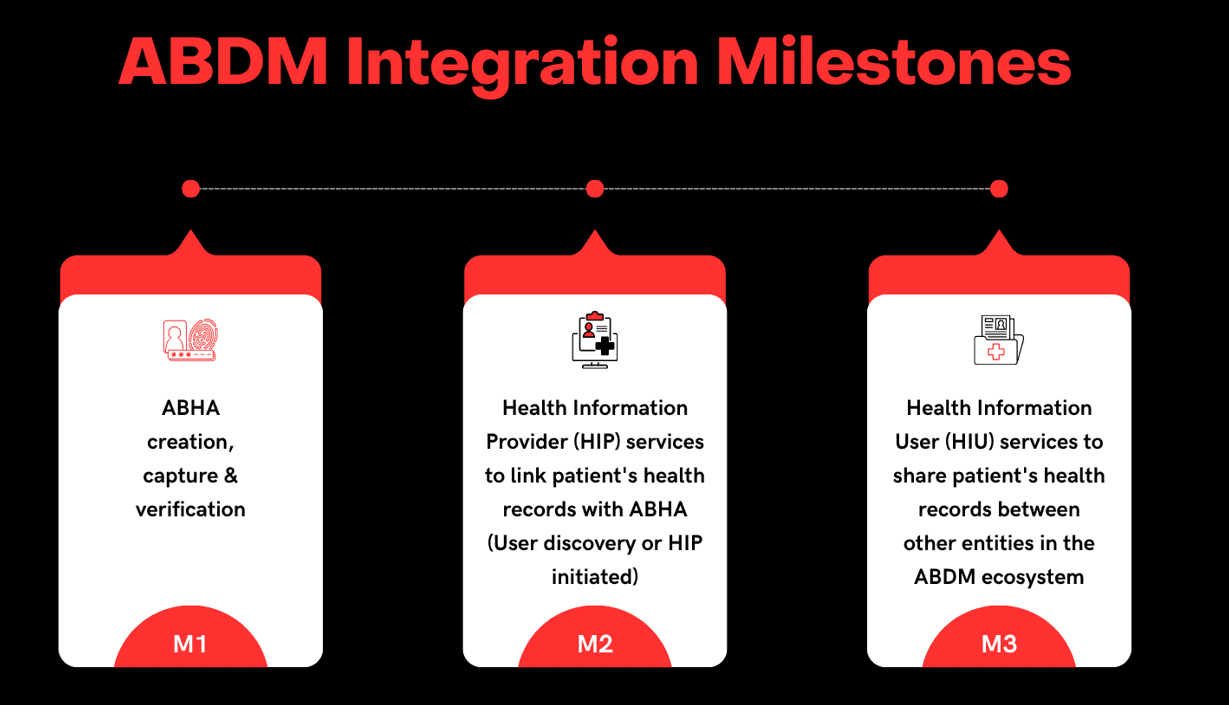
However, digitization presents inherent cybersecurity challenges. To address this, ABDM has implemented a systematic certification methodology consisting of three milestones (M1, M2, and M3), which is supplemented with cybersecurity monitoring from CERT-In. This blog digs into each milestone, including the technical requirements and how cybersecurity is enforced to secure sensitive health data.
ABDM Integration Milestones
What is a WASA Audit?
A WASA Audit (Web Application Security Assessment) is a comprehensive cybersecurity evaluation designed to ensure applications meet the ABDM Compliance standards. This audit identifies vulnerabilities, verifies data protection measures, and ensures adherence to national healthcare security best practices.
A WASA Audit thoroughly examines all critical aspects of a healthcare web application, including:
- Authentication Mechanisms: Ensuring robust user verification processes.
- Authorization Controls: Verifying that users have appropriate access levels.
- Data Encryption: Confirming that sensitive health data is encrypted both at rest and in transit to meet ABDM compliance.
- Session Management: Checking session timeout, cookie handling, and token security to prevent unauthorized access.
- API Security: Assessing API endpoints interacting with ABDM services for secure communication and access control.
These audits are conducted by CERT-In–empaneled agencies, providing a standardized and trusted security certification for ABDM-integrated healthcare platforms.
Why is WASA Audit Necessary for ABDM Compliance?
For healthcare organizations integrating with the Ayushman Bharat Digital Mission (ABDM), maintaining data integrity and security is non-negotiable. The WASA Audit plays a vital role in ensuring that healthcare applications comply with ABDM’s technical and security framework.
Here’s why the WASA Audit is mandatory for ABDM Compliance:
- Identifying Vulnerabilities: Detects security flaws such as weak authentication, misconfigured APIs, or insecure data storage that could lead to breaches.
- Ensuring ABDM & HDM Policy Compliance: Verifies that your application aligns with the ABDM Security Guidelines and the Health Data Management (HDM) Policy 2020, ensuring national-level data protection.
- Building Digital Trust: Demonstrates your organization’s commitment to secure healthcare data management, increasing confidence among users, hospitals, and ecosystem partners.
- Facilitating Integration: Passing the WASA Audit is a prerequisite for obtaining the ABHA Web Application Security Certificate, which is mandatory for ABDM sandbox or production integration.
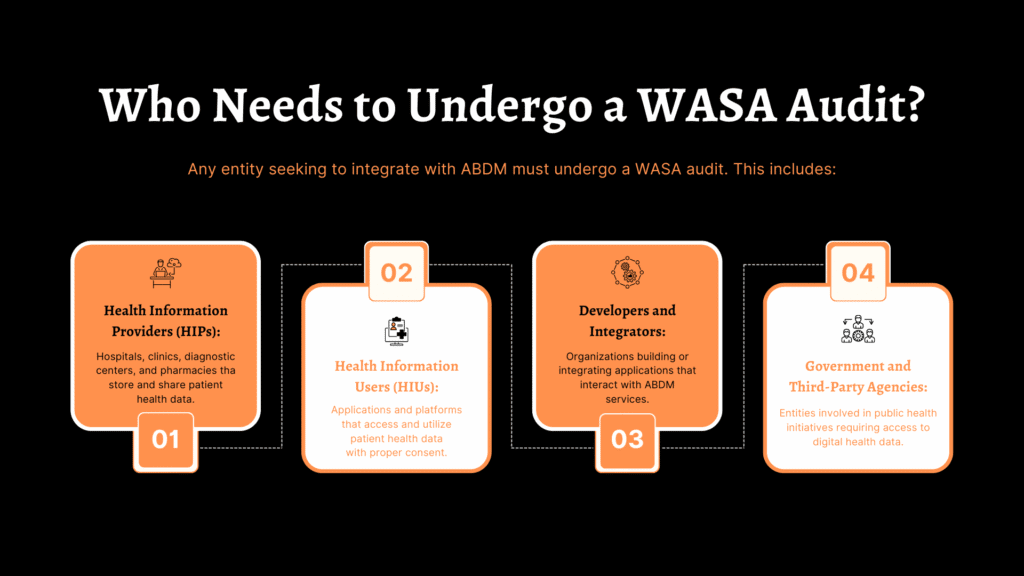
Who Needs to Undergo a WASA Audit?
The WASA Audit Process
1. Pre-Audit Assessment and Scoping
- Objective: Understand the application’s architecture, data flow, and ABDM integration points.
- Activities include:
- Reviewing system documentation and ABDM sandbox credentials.
- Identifying data-handling components (ABHA ID creation, consent APIs, FHIR data exchange).
- Mapping APIs, endpoints, and third-party integrations.
- Defining the audit scope: production vs. staging, internal/external components, API layers, and mobile/web interfaces.
- Deliverable: Audit Scope Document (ASD) defining assets, environments, and assessment boundaries.
2. Automated Vulnerability Assessment
- Objective: Identify known vulnerabilities across application layers.
- Tools Used: Industry-standard scanners such as Burp Suite Pro, OWASP ZAP, Nessus, Nikto, and Nmap.
- Testing Parameters:
- OWASP Top 10 compliance (SQLi, XSS, CSRF, IDOR, SSRF, etc.)
- Transport layer security (TLS/SSL configurations, HTTPS enforcement).
- Misconfiguration and exposure checks (CORS, headers, server info).
- API vulnerability scanning for ABDM endpoints.
- Deliverable: Preliminary Vulnerability Report outlining discovered flaws, severity ratings, and CVE references.
3. Manual Penetration Testing
- Objective: Simulate real-world attack scenarios to identify logical and business logic flaws that automated tools miss.
- Key Testing Areas:
- Authentication and authorization bypass validation.
- Session management flaws (token expiration, reuse, JWT validation).
- Role-based access control (HIP, HIU, and system admin roles).
- Consent API misuse or tampering attempts.
- Data leakage via error messages, metadata, or misconfigured APIs.
- Business logic abuse (e.g., manipulating health record requests).
- Deliverable: Comprehensive Vulnerability Report (CVR) with PoC (Proof-of-Concept) and risk mapping to ABDM guidelines.
4️. Compliance Validation Against ABDM and HDM Policy
- Objective: Verify alignment with ABDM’s technical and security standards.
- Compliance areas checked:
- Data protection – Encryption (AES-256 for storage, TLS 1.2+ for transit).
- Access control – Principle of least privilege and consent-based data sharing.
- Logging & monitoring – Security event tracking and incident alerting.
- Privacy-by-design – Anonymization and consent revocation support.
- API compliance – Alignment with ABDM sandbox specifications and FHIR standards.
- Deliverable: Compliance Checklist Report (CCR) summarizing ABDM conformity metrics.
5️. Remediation and Retesting
- Objective: Assist the development team in closing identified vulnerabilities.
- Steps:
- Provide technical remediation guidance with prioritized risk levels.
- Support patch validation and secure configuration changes.
- Conduct revalidation scans and targeted retesting.
- Deliverable: Closure Report confirming all critical and high vulnerabilities have been remediated.
6️. Final Security Certification
- Objective: Certify the application as “Safe to Host” for ABDM production integration.
- Deliverables include:
- Final Web Application Security Audit Report (WASA Report) signed by a CERT-In empaneled auditor.
- Vulnerability Closure Certificate (VCC).
- Safe-to-Host Certificate, mandatory for onboarding the application onto the ABDM production environment.
The Role of CERT-In in the ABDM Ecosystem
The Indian Computer Emergency Response Team (CERT-In) plays a pivotal role in the ABDM ecosystem by:
- Empaneling Security Auditors: CERT-In accredits agencies authorized to conduct WASA audits, ensuring a pool of qualified security experts.
- Defining Security Standards: Establishing guidelines and best practices for securing applications within the ABDM framework.
- Monitoring Compliance: Overseeing the adherence to security protocols and addressing any breaches or vulnerabilities.
- Providing Guidance: Offering support and resources to developers and organizations to enhance security measures.
Conclusion
Achieving ABDM Compliance isn’t just a regulatory checkbox — it’s a step toward securing India’s digital health ecosystem.
A CERT-In–empaneled WASA Audit helps healthcare applications protect sensitive health data, build stakeholder trust, and enable smooth integration with the national ABDM infrastructure.
If your organization develops or manages healthcare platforms, partnering with an authorized cybersecurity firm for a WASA Audit ensures your application meets the highest standards of ABDM security compliance.